

Moissanite vs Diamond Durability Explained: Which Lasts?
Last Updated: October 23, 2026
Quick Summary
Moissanite vs diamond durability depends on hardness, toughness and impact resistance, not one score. Diamond ranks 10 on Mohs and moissanite 9.25, yet both can chip, so setting, shape and daily habits decide how long a ring lasts.
- Diamond sits at 10 on the Mohs scale, while moissanite sits at 9.25.
- Diamond has four directions of perfect cleavage, so sharp strikes can split it.
- Round brilliants have no sharp corners and are the safest common shape.
- A bezel setting encircles the girdle and absorbs impact before it reaches the stone.
- Have prongs checked once a year to catch wear before a stone chips.
Table of Contents
- Moissanite vs Diamond: What Durability Really Means
- Moissanite Hardness vs Diamond: Reading the Mohs Scale
- Can Moissanite Chip? Impact, Fracture and Real-World Damage
- Scratch Resistance and Everyday Wear Compared
- Moissanite Engagement Ring Durability: Settings, Stones and Daily Life
- Brilliance, Fire and How Each Stone Ages
- Moissanite Care and Cleaning for Long-Term Shine
- Conclusion
- Frequently Asked Questions
Moissanite vs Diamond: What Durability Really Means
Durability is the question that decides most moissanite purchases, and it is the one most guides answer badly. At Charlotte's Cozy Corner, we see shoppers arrive with the same worry: will this stone still look right in five years? The honest answer is that moissanite vs diamond durability depends on three separate properties that get bundled together in marketing copy.
Hardness, Toughness and Durability Are Not the Same Thing
Hardness is a mineral's resistance to being scratched. Toughness is its resistance to cracking or breaking under impact. Durability is the practical result of both.
That distinction matters because a stone can be extremely hard and still chip. Ceramic is hard and shatters on a tile floor. Glass is soft and survives a drop. Gemstones behave the same way, and the Mohs scale measures only one of the three.
Moissanite Hardness vs Diamond: Reading the Mohs Scale
Diamond sits at 10 on the Mohs scale, the hardest known gemstone (gia.edu). Moissanite sits at 9.25, making it the second-hardest gemstone commonly set in fine jewelry.
| Property | Diamond | Moissanite |
|---|---|---|
| Mohs hardness | 10 | 9.25 |
| Scratch resistance | Excellent | Excellent |
| Toughness | Good, but cleaves along crystal planes | Good, resists chipping per some retailers |
| Brilliance | High refractive index | Higher refractive index |
| Fire | Moderate dispersion | Strong double refraction |
| Everyday wear | Suitable | Suitable |
The gap between 9.25 and 10 sounds larger than it behaves. Nothing in a normal day, from keys in a pocket to a countertop edge, reaches either number. Moissanite hardness vs diamond is a real difference, but it is not the difference most buyers imagine.
Can Moissanite Chip? Impact, Fracture and Real-World Damage
Yes, moissanite can chip, and so can diamond. This is the single most misunderstood point in the durability conversation, because hardness (scratch resistance) tells you almost nothing about what happens when a stone takes a sharp, off-angle blow. A stone that scores 9.25 or 10 on Mohs can still fracture; a stone that scores lower can survive a drop. Impact resistance is a separate property, and it is governed by crystal structure, cleavage, and the shape of the stone, not by the Mohs number.
Why hard stones still break
Diamond is the hardest mineral, but it has four directions of perfect cleavage, planes along which the crystal lattice is weakly bonded. A sharp strike parallel to one of those planes can split a diamond cleanly, which is why diamond cutters historically used cleavage to shape rough stones and why a jeweler will wince when a diamond ring hits a tile floor edge-first. Moissanite has a different crystal structure (hexagonal, silicon carbide) and does not share diamond's four-plane cleavage, so it does not split along flat planes the same way. That is the grain of truth behind retailer claims that moissanite 'resists chipping.' But moissanite is not tough in the engineering sense either: it is brittle, and a hard enough point impact can still take a conchoidal (shell-shaped) fracture out of a girdle or corner.

What actually causes chips in real life
Most chips are not caused by dropping a ring from waist height onto carpet. They come from concentrated point loads:
- Doorframes and car doors. The classic engagement-ring chip is a sideways knock against a hard edge while the hand is moving. The stone's girdle (its thin outer edge) takes the load.
- Countertop and tile edges. Granite and porcelain are harder than people assume; an edge-first strike concentrates force on a tiny area.
- Loose stones in a drawer. Two stones knocking together, or a stone against a metal clasp, produce repeated small impacts that add up.
Shape changes the risk more than material
A round brilliant has no sharp corners, so impact force spreads across a curved girdle. Princess, marquise, pear, and radiant cuts have points and corners where force concentrates, those are the shapes that chip most often, in diamond and moissanite alike. If you love a pointed shape, the setting matters more than the stone: a V-prong or bezel that covers the point removes most of the risk.
The honest comparison
Neither material wins the impact contest outright. Diamond's cleavage makes it vulnerable to certain sharp strikes; moissanite's brittleness makes it vulnerable to point loads on thin edges. What separates a ring that survives ten years from one that chips in year two is almost never the material, it is the setting, the shape, and whether the wearer takes the ring off before the gym.
Scratch Resistance and Everyday Wear Compared
Scratch resistance is where both stones earn their reputation. Neither diamond nor moissanite scratches from daily contact with fabric, paper, skin, or soft metals. Abrasion resistance at this level is why both are recommended for engagement rings worn continuously.
What does scratch a stone is another stone of equal or greater hardness, or abrasive grit. That means a few specific habits matter more than the material choice:
- Remove rings before gardening, moving furniture, or handling abrasive cleaners
- Store each piece separately in a soft pouch or lined compartment
- Avoid wearing rings to the beach, where sand is quartz
Follow that list and the practical difference between a 9.25 and a 10 nearly disappears. Ignore it and either stone will show wear.
1 Karat Princess Cut Moissanite Diamond Ring →
Moissanite Engagement Ring Durability: Settings, Stones and Daily Life
Moissanite engagement ring durability is decided less by the stone than by three things the buyer controls: the setting, the cut, and the wear pattern. A well-set moissanite outlasts a poorly set diamond every time. This section translates the material properties above into choices you can actually make.

Setting style is the biggest lever
- Bezel. A metal rim encircles the girdle and absorbs impact before it reaches the stone. It is the most protective common setting and the best choice for anyone hard on their hands.
- Low-profile six-prong. Six prongs spread holding force and a low profile keeps the stone close to the finger, reducing lever-arm knocks. Check prongs annually.
- Tall, thin four-prong. Elegant and exposed. The stone sits high and the thin prongs wear faster; this is the setting most associated with chipped girdles.
Cut shape changes the risk profile
Round brilliants have no sharp corners and spread impact across a curved girdle, the safest common shape. Oval and cushion are close behind. Princess, marquise, pear, and radiant concentrate force at points and corners and chip most often in both diamond and moissanite. If a pointed shape is non-negotiable, pair it with a protective setting rather than relying on the stone alone.
Durability by jewelry use case
Not every piece faces the same wear, so the guidance should not be identical:
- Engagement rings (daily, continuous wear). Highest risk. Prioritize a protective setting, a round or bezel-set stone, and an annual prong check. Remove for gym, gardening, and heavy lifting.
- Wedding bands (daily, low profile). Generally the safest daily piece because stones sit low or are absent. Channel and bezel settings protect accent stones well.
- Earrings (daily, moderate risk). Studs are low-risk; drops and dangles swing and can catch. Backs matter, screw-backs resist loss better than push-backs.
Daily habits that outweigh the material choice
- Remove rings before gardening, moving furniture, or handling abrasive cleaners.
- Store each piece separately in a soft pouch or lined compartment.
- Avoid the beach, sand is quartz and abrades anything softer.
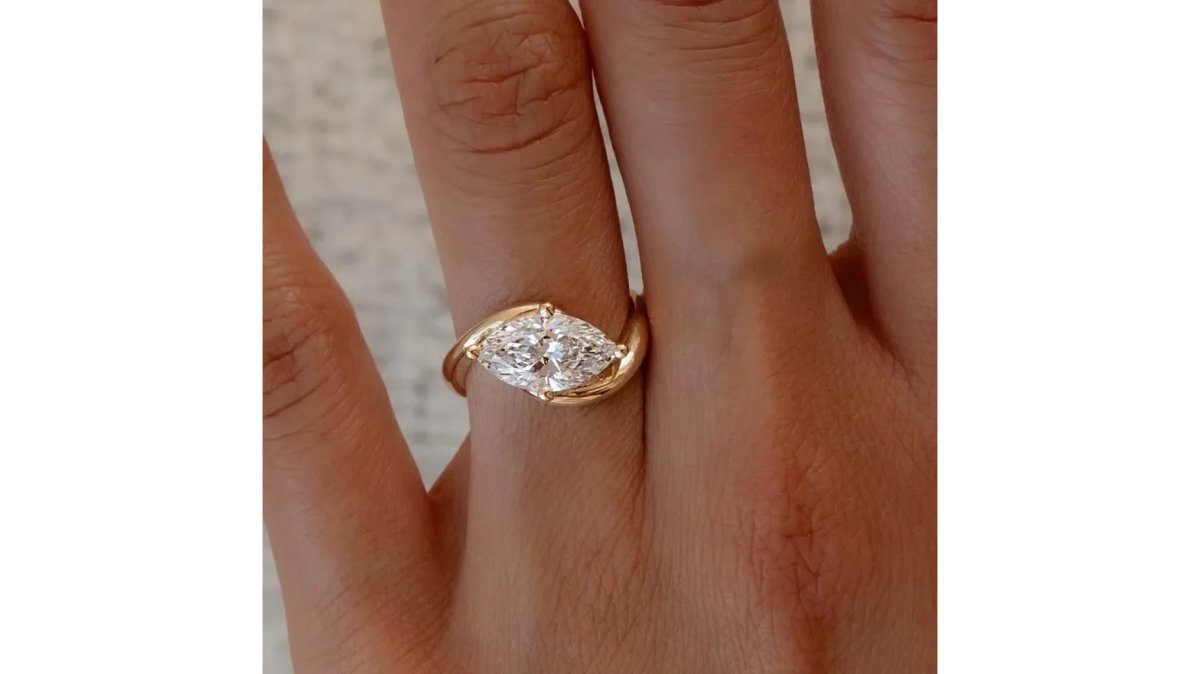
Our 1 Karat Princess Cut Moissanite Diamond Ring uses a U-shaped design built for comfortable daily wear. For a lower-profile everyday option, the Stylish Round Moissanite Ring for Women sets a round stone in silver, round cuts have no sharp corners to catch, which is why they are the most forgiving shape for continuous wear.

Brilliance, Fire and How Each Stone Ages
Neither stone ages. Diamond and moissanite are stable minerals, so they do not yellow, cloud, or degrade with time. What changes is the surface.
Brilliance is the white light a stone reflects; fire is the rainbow flash it splits from white light. Moissanite has a higher refractive index than diamond and separates light more strongly, which is why it throws more color in sunlight.
The stone does not wear out. The setting, the surface, and the wearer's habits decide how a ring looks in ten years.
Moissanite Care and Cleaning for Long-Term Shine
Moissanite care and cleaning is simple and takes about five minutes. Warm water, a drop of mild dish soap, and a soft toothbrush restore the light return on any stone. Rinse over a closed drain or in a bowl, dry with a lint-free cloth, and skip ultrasonic cleaners if the setting has small side stones.
Avoid chlorine and harsh chemicals, which attack metal alloys rather than the stone. Silver settings in particular benefit from being dried fully after contact with water.
Conclusion
The real challenge with moissanite is not whether the stone lasts, because it does. It is choosing a setting that protects it and building a small care habit that keeps it bright. Charlotte's Cozy Corner offers moissanite pieces, including the marquise cut engagement ring and stud earrings in S925 silver. Subscribe to our emails to hear about new arrivals and care guides.
Frequently Asked Questions
Will moissanite last as long as a diamond?
For everyday wear, moissanite is durable enough to last decades when cared for properly. It rates 9.25 on the Mohs scale compared with diamond's 10, so it resists scratches well but sits slightly below diamond in pure hardness. Neither stone is indestructible: both can chip or fracture under a hard enough impact. The setting and how you wear the ring matter as much as the stone itself. Store moissanite separately from harder pieces and have prongs checked regularly to keep it secure.
Can moissanite chip or scratch?
Yes, moissanite can chip and scratch, though it takes more force than most gemstones. Its 9.25 Mohs rating makes scratching unlikely in normal daily wear, but a sharp blow against a hard surface can cause chipping or fracture, especially at the girdle. Diamond is not immune either; it can shear along crystal growth planes when struck. Remove your ring for gym sessions, heavy lifting and gardening, and avoid knocking it against countertops. A protective setting with well-maintained prongs lowers the risk.
How does moissanite hardness compare with diamond hardness?
Diamond sits at 10 on the Mohs scale, the hardest known gemstone, while moissanite rates 9.25 as the second-hardest gemstone. The gap is small in everyday terms. Both resist scratches from common materials like glass, steel and most household surfaces. The practical difference shows up over years of rough wear rather than in daily use. For an engagement ring, either stone holds up well if you choose a secure setting and follow basic moissanite care and cleaning habits.
Is moissanite durable enough for everyday wear?
Moissanite engagement ring durability is strong enough for daily wear, including work, travel and gentle exercise. Its hardness keeps the surface bright, and its toughness handles normal knocks. The main risks are hard impacts and loose prongs, not routine use. Clean it regularly with mild soap and warm water, store it in a soft pouch, and have a jeweler inspect the setting once a year. With that routine, a moissanite ring stays wearable for many years.
